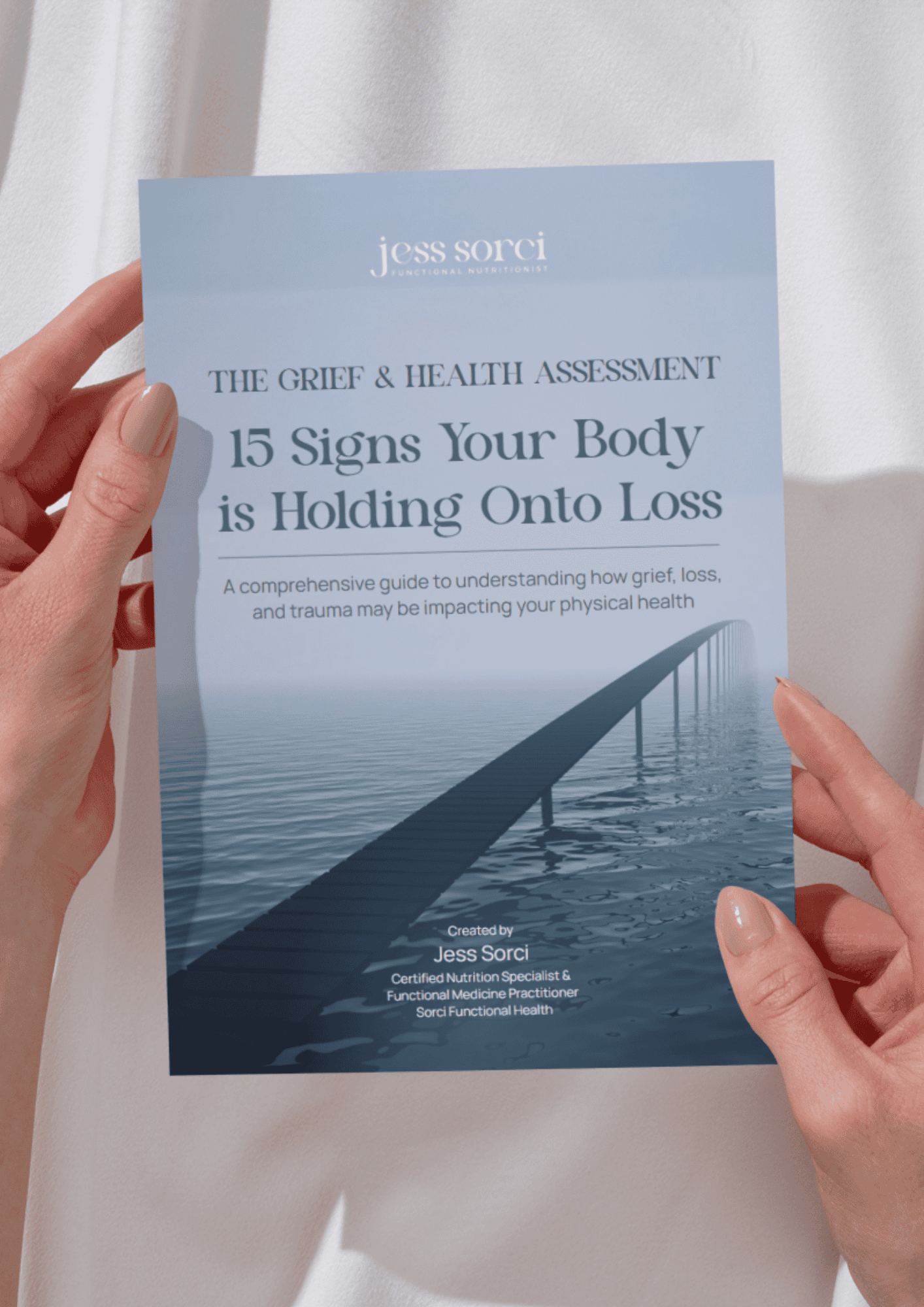

Grief is universal – we will all experience it at some point in our lives. Yet for something so fundamental to the human experience, we’re remarkably unprepared for how it actually feels and what it does to our bodies. When I experienced my own profound loss, I was shocked by how grief didn’t just break my heart – it broke my entire body.
Within months of my loss, I was experiencing panic attacks for the first time in my life. My hormones were completely out of balance, with progesterone levels so low I could barely function. My digestion was in chaos, I was getting sick constantly, and I developed hypothyroidism. I felt like I was falling apart from the inside out. And here’s the thing – I was already a functional medicine practitioner at this time. I had all the knowledge and tools at my disposal, yet I was still struggling to manage what grief was doing to my body.
What nobody tells you is that grief isn’t just an emotional experience – it’s a full-body trauma that affects every system in your body. And while everyone says “time heals all wounds,” what they don’t tell you is that there are concrete, compassionate ways to support your body through this process.
Here are the five things I wish someone had told me about grief – and how functional medicine can help you navigate this difficult journey.
1. Grief Literally Changes Your Body Chemistry
What nobody tells you: Grief triggers a cascade of stress hormones that can dysregulate your entire endocrine system for months or even years.
What happened to me: My progesterone levels plummeted, leaving me with severe anxiety and panic attacks. My cortisol was chronically elevated, which suppressed my thyroid function and wreaked havoc on my blood sugar regulation.
The science behind it: When we experience profound loss, our body interprets it as a life-threatening situation. The hypothalamic-pituitary-adrenal (HPA) axis – our stress response system – goes into overdrive. This floods our system with cortisol and adrenaline while suppressing the production of other hormones like progesterone, which is our natural calming hormone.
How to support yourself:
- Prioritize protein and healthy fats to give your body the building blocks for hormone production
- Consider adaptogenic herbs like ashwagandha or rhodiola to support your adrenal glands
- Get your hormones tested if you’re experiencing anxiety, sleep issues, or other unexplained symptoms
- Support progesterone naturally with foods like pumpkin seeds, sweet potatoes, and dark leafy greens
If your symptoms don’t match what your thyroid labs are telling you, explore why this happens on the Thyroid Imbalances page.
2. Your Digestive System Bears the Brunt of Emotional Pain
What nobody tells you: The gut-brain connection means that emotional trauma directly impacts your digestive system, often causing symptoms that seem completely unrelated to grief.

What happened to me: I went from having rock-solid digestion to experiencing bloating, irregular bowel movements, and food sensitivities I’d never had before. Foods that used to nourish me suddenly felt like they were fighting against my system.
The science behind it: Your gut is often called your “second brain” because it contains more neurotransmitters than your actual brain. When you’re grieving, the chronic stress response disrupts the delicate balance of gut bacteria, reduces digestive enzyme production, and increases intestinal permeability (leaky gut).
How to support yourself:
- Eat warm, cooked foods that are easier to digest when your system is compromised
- Include bone broth to heal and seal the gut lining
- Add fermented foods like sauerkraut or kefir to support beneficial bacteria
- Consider digestive enzymes if you’re experiencing bloating or discomfort after meals
- Avoid inflammatory foods like processed foods, excess sugar, and alcohol during acute grief
To understand more about how digestion and mood are linked, visit the Gut Health & Mood Disorders page.
3. Grief Can Trigger Autoimmune Responses and Inflammation
What nobody tells you: The chronic stress of grief can trigger autoimmune conditions or cause existing ones to flare, and it creates systemic inflammation throughout your body.
What happened to me: I was constantly getting sick – every cold, every bug that was going around seemed to find me. I later learned this was because grief had severely compromised my immune system. My body was so focused on processing the trauma that it couldn’t properly defend against everyday pathogens.
The science behind it: Chronic stress from grief dysregulates your immune system, making it more likely to attack your own tissues. It also increases inflammatory markers throughout your body, which can manifest as skin issues, joint pain, or other seemingly unrelated symptoms.
How to support yourself:
- Focus on anti-inflammatory foods like fatty fish, berries, and leafy greens
- Include turmeric and ginger in your diet for their powerful anti-inflammatory properties
- Get adequate omega-3 fatty acids from fish oil or algae supplements
- Consider curcumin supplementation to help manage inflammation
- Avoid inflammatory triggers like processed foods, excess sugar, and trans fats
4. Sleep Becomes Both Essential and Elusive
What nobody tells you: Grief disrupts your sleep patterns just when your body needs rest the most for healing and processing.
What happened to me: I found myself exhausted but unable to sleep, or sleeping restlessly and waking up more tired than when I went to bed. This created a vicious cycle where lack of sleep made everything else worse.
The science behind it: Grief affects your circadian rhythms and the production of melatonin, your natural sleep hormone. The elevated cortisol from chronic stress can keep you wired even when you’re exhausted, and the emotional processing that happens during grief can make your mind race at bedtime.

How to support yourself:
- Create a consistent bedtime routine even when everything else feels chaotic
- Avoid caffeine after 2 PM as your system is already hyperstimulated
- Try magnesium supplementation to help calm your nervous system
- Consider herbal teas like chamomile or passionflower before bed
- Keep your bedroom cool and dark to support natural melatonin production
- Practice gentle bedtime yoga or meditation to help your body shift into rest mode
5. Grief Has No Timeline, and Neither Does Your Body’s Recovery
What nobody tells you: While people expect you to “bounce back” after a few months, your body may take much longer to recover from the physiological impact of grief.
What happened to me: Even after I thought I was “over” my grief emotionally, my body was still showing signs of the trauma months later. My thyroid was still sluggish, my hormones were still imbalanced, and my digestion was still sensitive.
The science behind it: Your body doesn’t operate on social timelines. The physiological changes that occur during grief – hormone imbalances, immune dysfunction, digestive issues – can persist long after the acute emotional phase has passed. This is normal and doesn’t mean you’re “not healing properly.”
How to support yourself:
- Be patient with your body’s timeline – healing isn’t linear
- Continue supporting your body even when you feel emotionally better
- Work with a healthcare provider who understands the physical impact of grief
- Don’t rush back to high-intensity activities until your body feels ready
- Listen to your body’s signals and rest when you need to
Eating Through Grief: A Functional Medicine Approach
The Challenge:
When you’re grieving, cooking and eating often feel impossible. You might lose your appetite entirely, or find yourself reaching for comfort foods that ultimately make you feel worse. For me, cooking a meal reminded me of being alone – I had an attitude of “why bother to cook just for me?”
The Functional Medicine Approach:
Instead of adding pressure to eat “perfectly,” focus on gentle, nourishing support that works with your grief, not against it.
Phase 1: Survival Mode (Acute Grief)
Goal: Keep your blood sugar stable and get basic nutrition without overwhelming yourself.
Focus on:
- Smoothies packed with protein powder, healthy fats, and greens
- Bone broth for easy-to-absorb nutrients and gut healing
- Simple, one-pot meals like soups and stews
- Prepared foods from health-conscious sources when cooking feels impossible
- Hydration with electrolyte support
Avoid:
- Complicated meal planning or prep
- Judgment about what you “should” be eating
- Skipping meals entirely (set gentle reminders if needed)
Phase 2: Stabilization (Months 2-6)
Goal: Begin to address the physiological imbalances caused by grief.

Focus on:
- Hormone-supporting foods like pumpkin seeds, avocados, and sweet potatoes
- Digestive healing with fermented foods and fiber
- Anti-inflammatory foods to calm systemic inflammation
- Gentle meal prep when you have good days
- Blood sugar balance with protein at every meal
Consider adding:
- Adaptogenic herbs for stress support
- Digestive enzymes if needed
- High-quality multivitamin to fill nutritional gaps
Phase 3: Rebuilding (6+ months)
Goal: Optimize your nutrition to support long-term healing and prevent chronic health issues.
Focus on:
- Comprehensive nutrient testing to identify deficiencies
- Personalized nutrition plan based on your body’s specific needs
- Gut health optimization with targeted probiotics and healing foods
- Hormone rebalancing through diet and lifestyle
- Building sustainable habits for long-term health
Practical Grief-Support Recipes
Healing Golden Milk Smoothie
Anti-inflammatory and hormone-supporting
- 1 cup coconut milk
- 1 scoop vanilla protein powder
- 1 banana
- 1 tsp turmeric
- 1/2 tsp ginger
- 1 tbsp almond butter
- 1 tsp raw honey
- Ice as needed
Gut-Healing Bone Broth Soup
Digestive support and easy nutrition
- 4 cups bone broth
- 1 cup cooked rice or quinoa
- 1/2 cup cooked chicken or tofu
- 1 cup steamed vegetables
- 1 tsp ginger
- Salt and herbs to taste
Calming Evening Tea Blend
Sleep and nervous system support
- 1 tsp chamomile
- 1/2 tsp passionflower
- 1/2 tsp lemon balm
- Raw honey to taste
When to Seek Additional Support
Red Flags That Suggest You Need Professional Help:
- Physical symptoms persisting beyond 6 months
- Severe anxiety or panic attacks
- Significant hormone imbalances
- Persistent digestive issues
- Autoimmune flares or new health problems
- Inability to maintain basic nutrition
Types of Support to Consider:
- Functional medicine practitioner for comprehensive health assessment
- Grief counselor for emotional processing
- Nutritionist familiar with trauma and grief
- Naturopathic doctor for natural hormone support
- Support groups for community and understanding
If grief has triggered autoimmune symptoms or flares, you may want to explore the Autoimmune Diseases page.
A Message of Hope
If you’re experiencing grief right now, please know that what you’re experiencing in your body is normal. Your racing heart, your digestive upset, your sleepless nights, your skin breakouts – these aren’t signs that you’re broken. They’re signs that you’re human, and that your body is trying to process an enormous emotional and physiological burden.

Healing from grief isn’t just about time – it’s about giving your body the support it needs to recover from trauma. You don’t have to suffer through this alone, and you don’t have to accept that feeling terrible is just “part of grief.”
Your body has an incredible capacity to heal when given the right support. By understanding the physical impact of grief and taking gentle, compassionate steps to nourish yourself, you can move through this difficult time with more grace and emerge stronger on the other side.
Your Next Steps
If you’re struggling with the physical symptoms of grief and don’t know where to start, you’re not alone. Working with someone who understands both the emotional and physiological aspects of grief can make all the difference in your healing journey.
Book a free discovery call with me to:
- Discuss how grief may be affecting your physical health
- Learn about testing options to identify imbalances
- Create a gentle, personalized plan for healing
- Get support from someone who truly understands this journey
Ready to support your body through grief with compassion and expertise? Schedule your complimentary discovery call today.
Remember: Grief is not just an emotional journey – it’s a whole-body experience that deserves whole-body support. Be gentle with yourself, trust the process, and know that healing is possible.
In loving memory of all we have lost, and in hope for all we can heal.